Among the country trips I have made so far, my trip to Nepal was one of the most enjoyable trips I have had. Thanks to what I saw and witnessed on this trip, I also had the opportunity to travel to my own past. Nepal’s mountains are very high and magnificent, its streets are narrow and dusty but full of life to the bone, its people are tired, poor but very happy and peaceful, its children are neglected, snotty but very cute and sweet, its food is spicy and hot but very delicious, Nepal does not have many skyscrapers, plazas, fancy business and shopping centers, but it does have magnificent temples, palace squares and stupas that give people peace…
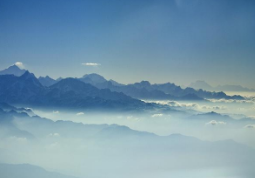
It is as if time has stopped in Nepal. People are experiencing the inner purity of hundreds of years ago. You become one with the past in the Palace squares, which resemble unique open-air museums. You watch the sunrise and sunset against the Himalayas with admiration, you encounter the magnificence of the mountain peaks surrounding the country and you are greeted by smiling people in the streets… From here, I once again say Nameste and Danyavard to the beautiful people of this beautiful country…

Some general information about Nepal:
The population is around 28 million. It is the only Hindu Kingdom in the world. It is among the 10 poorest countries in the world. It is the only country whose flag is not rectangular. It has different calendars. The first week of April is New Year's Eve. 10 peaks higher than 8,000 meters in the Himalayas are in Nepal. The highest peak in the world, Everest (Sagarmatha), is in Nepal. Kathmandu is located at an altitude of 1,500 meters, but it snows only once every 20-30 years. There are more than 250 peaks in Nepal that exceed 7,000 meters. Due to the compression of the Asian continent and the Indian mainland, the Himalayas rise a little more each year. Since Saturday is a religious and official holiday, some shops and government offices are closed. Sunday is the first day of the week. There is no compulsory education in Nepal, and 40% of the population is illiterate. Military service is not compulsory, but the respected mercenaries, Gurkhas—who also serve in some countries' armies, such as the United Kingdom—earn around 2,200 dollars, which is an incredibly high salary. Although not across the whole country, there is a serious traffic problem, especially in Kathmandu. A person who has lost a loved one shaves their head and draws a red line at the base of their eyelashes to symbolize limiting their tears.
It is a bit difficult to see cats in Nepal, they are rarely seen on the streets. Because cats are considered unlucky and are not fed. Families do not feed dogs either, but there are many dogs and they are free to roam everywhere.
Food Culture
Restaurants in Nepal do not prepare food in advance. When you place an order, they start making it from scratch, and it takes a long time to prepare. A dish called 'momo', which is similar to our manti, is common and quite delicious. It can be made with meat, vegetables, or chicken. A dish called 'Chop Suey' is similar to noodles but is fried and slightly watery. For dessert, there is a dish called 'Banana Fritter', which consists of fried bananas. The regional beers 'Everest' and 'Nepal Ice' are very delicious. They also have a bread called 'chapati', which is similar to lavash or bazlama, but it does not come with the meal unless you specifically request it.

Kathmandu
Durbar Square
In Kathmandu, one of the three Kingdom cities (Kathmandu, Patan, and Bhaktapur) located in the Kathmandu Valley, 'Durbar Square' is at the center of the city, as in every Kingdom city. Apart from Durbar Square, the second major tourist attraction in Kathmandu is 'Thamel Street.' Life in Kathmandu revolves around Thamel Street and Durbar Square, which are both touristic and historic centers. Thamel Street and its surrounding alleys are filled with pashmina sellers, mask vendors, countless souvenir shops, restaurants offering cuisines from around the world for every budget, internet cafes, and hotels.

The buildings in Durbar Square were declared a World Heritage Site by UNESCO in 1979 and are under protection. This square is surrounded by many temples and architecturally important buildings.


'Kasthamandap,' 'Ashok Binayak,' 'Maru Tole,' 'Maju Deval,' 'Kumari Devi,' and 'Kumari Bahal' are some of them. Buddhism and Hinduism are the most widespread religions in Nepal.


Swayambhunath:
Swayambhunath means “self-created”. This temple, built on a hill overlooking the Kathmandu Valley, believed to be sacred even before humans, has been built for over 2000 years. The main structure, known as the Stupa, is a large white hemisphere made of bricks and clay. Swayambhunath temple is also called the Monkey temple. It is the largest Buddhist temple in terms of the area it covers. There are many monkeys here. When feeding them, they will prefer the banana bag in your hand or your camera, which they think is a bag, instead of the banana you give them, so be careful.


Worship is not performed by entering the structure, but by walking clockwise around it. A section covered with silver gilding and a pointed tower consisting of progressively smaller circles are built just above the hemisphere. The Buddha's all-seeing eyes, depicted on all four sides of this tower, protect and watch over the Buddhists living in the Kathmandu Valley from all kinds of evil and wrongdoing.

There are prayer wheels and prayer flags in and around Buddhist temples. According to their belief, as long as the prayer wheels with the teachings of the Buddha written on them are rotated and the prayer flags are waved (these teachings will continue to spread all over the world). There are prayer wheels of various sizes in this temple as well as a giant prayer wheel. You can watch the panoramic view of Kathmandu from the terrace of this temple, which is also built on a hill, or you can take a photo of it.


Bouddhanth:
This massive and ancient Stupa is known as the largest Buddhist temple in the world. Buddhists from all over the world, including Bhutan, Tibet, India, and many other countries, come to visit this sacred site. The settlement surrounding the structure is home to a dense Tibetan population who fled Tibet during the Chinese invasion and sought refuge here. For this reason, Bouddhanath is also called 'Little Tibet.' The Stupa has a diameter of 100 meters and is built on an octagonal foundation. The prayer wheels inside, built by the Licchavi King Mana Deva in the fifth century, make it a significant religious site. The structure stands 36 meters tall, and atop it rises the tower known as the 'Seeing Eyes of Buddha,' symbolizing enlightenment, devotion, compassion, wisdom, and nirvana. The buildings encircling the Stupa also house monasteries.

As in all Buddhist temples, they go around the temple clockwise and turn the prayer wheel. Since this is not a Hindu temple, you can join in and turn the prayer wheels with them. The entire area around this temple is surrounded by shops.


Pashupatinath(the largest Hindu temple in Kathmandu)
Pashupati literally means 'Lord of the Animals.' According to legends, Lord Shiva took the form of an antelope and lived here to escape from the gods. The temple, with its two-story golden roof and silver door, is one of the finest examples of Newari architecture. Since non-Hindus are not allowed to enter Hindu temples, it is not possible to enter this one either. However, the temple can be viewed from the other side of the Bagmati River, which divides the temple complex. The Bagmati River is considered sacred, similar to the Ganges River in Varanasi, India. This temple is also a site where Hindus cremate their dead. Nobles are cremated on the upper side of the bridge that connects the two banks of the river, while ordinary people are cremated on the lower side.

The cremation of a dead body takes about 3 hours and this task falls to the male child of the family. The cremation process begins by putting fire into the mouth of the dead person and contrary to popular belief, the strong smell emitted during the cremation does not come from the dead person but mainly from the wood, and this wood smell masks the smell of the dead. The ashes are thrown into the river and young people searching for the gold teeth of the dead are often seen in this river.


It is a great honor for a Hindu to be cremated here and have the ashes thrown into the river. Elderly Hindus who feel that death is approaching come from many regions and live around the temple to wait for death here. Mourning is very rare during this ceremony because it is seen as a journey the soul embarks upon. The men of the family hosting the funeral shave their heads except for the last lock of hair to express their mourning. When the King was killed in 2002, almost all Nepalese men shaved their heads to the last lock.


Again, this temple is a place where many 'Sadus' live, individuals who have completely isolated themselves from life, who only worship, do not work, do not marry, do not wash, and do not cut their hair and beards. The poorer the Sadus, the more mature their souls are considered, and they are highly respected. Only the 'Sadus' are not cremated; they are buried and go directly to heaven. (Those who take pictures in public and ask for money are not considered 'Sadus', but rather those who have given up their life as 'Sadus' and pursue money.)


There is also an old people's home near this temple. There are old people here who have no one, who are waiting to die and to be cremated and their ashes scattered in the holy Bagmati River after they die. They live in poverty and deprivation. Their only source of income is food and clothing donations from helpful people. Their only goal is to die and be cremated.


Patan:
Also known as “Lalitpur”, the literal meaning is the city of fine arts. The city still retains its medieval atmosphere. The city’s borders are determined by four stupas built by the Indian Emperor Ashoko in 250 BC. Almost half of the people living in this city are engaged in various handicrafts. Patan is one of the most important cities in Asia for Buddhists. Since the 7th century, pilgrims, scholars and monks from India, Tibet and China have visited the city. According to legend, the city once consisted of only monks and craftsmen.


Patan is full of Hindu temples, Buddhist monuments, bronze figures, guardian deities, structures decorated with wonderful metal and wood carvings. Traditional production has continued in Patan since ancient times, and the ancestors of the craftsmen working today were called from Beijing and Tibet to decorate the city with monasteries, pagodas, and to create figures of the gods.


Bungamati Village :
Bungamati village is a village that has preserved its original state since it was first established in the 16th century, where the Newari people live and speak their own language, and which takes its name from the god of fertility. The Rato Machhendranath Temple, named after the god, is one of the must-see places in the village. The village is also very famous for its woodwork and wooden products.


Khokana village:
Another Newari village. A village with a predominantly Buddhist population. Chicken and pigs are not kept in the village due to their beliefs. The village preserves its authentic structure and is under protection as part of its cultural heritage. People's daily lives take place on the village streets and in temples. This is a place where we will have the opportunity to witness the hustle and bustle of daily life in a typical Newari village. It is also a village famous for obtaining oil from the mustard plant.


Bhaktapur:
Bhaktapur, also known as Bhadgaon, is 1401 meters above sea level. The city, which is home to medieval art and architecture, is also where Bertoluchi’s Little Buddha lived. The city is shaped like a mussel shell. Pottery and wickerwork are traditional production areas in Bhaktapur, which means City of Devotees. Bhaktur, which has all the characteristics of a typical Newari city, is one of Nepal’s greatest treasures.:


Nagarkot:
Located 32 km north of Kathmandu, Nagarkot is an ancient settlement famous for its sunrise and sunset views over the Himalayas. From where you can view the Kathmandu Valley, Nagarkot is an important stop for Himalayan travelers.


Changu Narayan Temple:
The temple, which has witnessed many destructions and fires, dates back to the 4th century. This is a temple protected under the UNESCO World Cultural Heritage. The temple is a structure built for the god Visnu. This is a temple with a very fascinating atmosphere with its fine workmanship and various god figures.

For Photographers:
Nepal is a country that offers beautiful photos with its people, nature, and stupas. You will mostly come across street photos, portraits of people, and places that are sacred to them. As for photography equipment: one or two camera bodies, as well as: - 10-24 mm (equivalent to 16-35 mm full frame) wide-angle lens - 16-50 mm (equivalent to 24-70 mm full frame) zoom lens - 40-150 mm (equivalent to 70-200 mm full frame) telephoto lens - 35 mm and 56 mm (equivalent to 50 mm and 85 mm full frame) prime lenses.
When taking photos of people, do not try to photograph one or a few people you see right away. First of all, approaching people and greeting them by saying Nameste will allow you to take much warmer and more qualified photos. You will need a wide angle lens when taking photos of Buddhist temples. Since these places are large and magnificent structures, wide angle frames will be useful. Telephoto lenses will do the trick when taking photos of mountains, and classic 16-50 mm (24-70 mm full frame equivalent) lenses will do the trick when walking on the streets. If you are going to walk around the villages, a wide range zoom lens such as 18-135 mm will be useful for you to move comfortably. People in Nepal are gentle towards taking photos. You work comfortably. The thing you need to pay attention to is not to try to photograph people in a way that will disturb them while they are praying. First of all, we need to respect people and their beliefs. It is necessary to use open aperture lenses for indoor shooting.
Yorumlar