Distant countries should attract you, people you dont know, You should burn with the desire to read all the books, to know all the lives. This is what Ataol Behramoğlu says in one of his poems.
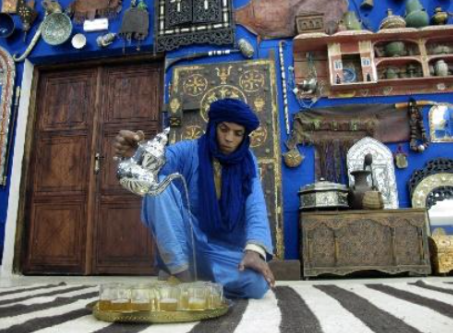
Meeting new places, new people, witnessing new lives in geographies I have never been to or seen before has always excited me. Morocco is without a doubt one of the most exotic places in the world. The modern age and the old age are intertwined. On one side the Atlas Mountains, on the other the Atlantic Ocean, and when you go inland the magnificent Sahara (desert). In every city in the country there is a new city and an old city (medina). In the new cities there is the modern face of the city life we are used to, while in the medinas there is the old age life intertwined with poverty and chaos.
When you enter or exit a door, everything changes in an instant, as if it were fascinating. For this reason, I have been to this beautiful country twice, once in 2011 and once this year in 2016. I dont know how many more times I will go, but I will definitely go again.
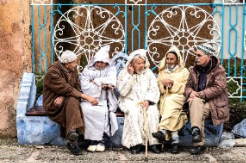
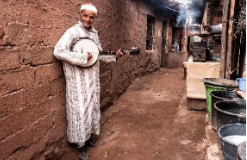
First, some general information about the country;
Morocco, called Al-Mağribul-Aqsa (The Place in the West) by the Arabs, is the westernmost country in the Islamic geography. It is a country that has gained independence and is governed by a Parliamentary Monarchy, with Mohammed VI as its king, and is home to a population of approximately 34 million. 90% of the population speaks Arabic, 30% Berber, almost all French and Spanish on the coast... English and other languages are known and spoken by a much smaller percentage. The population consists of Arabs and Berbers who were assimilated and Arabized by the Arabs for about 100 years in the 7th century. When it comes to the Moroccan economy, I think the first thing that comes to mind is agriculture... 40% of the countrys workforce is engaged in agriculture... Agriculture is followed by underground mines... Oil and coal have the smallest share among underground resources, but the country mainly provides its energy from hydroelectric power plants...
CASABLANCA
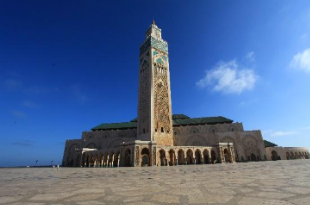
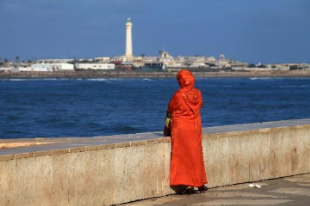
The most spectacular structure in Casablanca is the Hassan II Mosque. It is known as the second largest mosque in the world after the Masjid al-Haram in Mecca. Designed by French architect Michel Pinseau, the mosque was built on a land reclaimed from the sea on the shores of the Atlantic Ocean. The mosque is wide enough to allow 25,000 people to pray inside and 80,000 people to pray in its courtyard at the same time, and its minaret is the tallest in the world at 210 meters.
MARAKES
OUARZAZATE
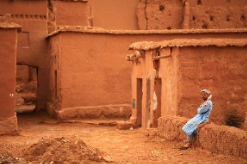
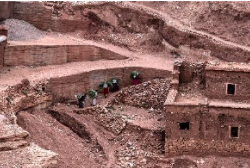
Ouarzazate “This word also means the place where there is no sound in Arabic. It is the last stopover point where the Sahara allows you to watch itself from afar before it envelops you. The famous Tifoultoute and Taourirt Kasbahs of this city, where families still live, have a lot to say about Berber culture and life. Kasbahs are a group of houses that are common in the Sahara desert, resembling medieval castles surrounded by walls where military purposes or members of a family or tribe live, and can be considered the ancestors of todays towns. Although they do not look very comfortable with their low entrances, narrow, low corridors, and windows that are small enough to allow only light to seep in, they seem to be the only way for people to resist the harsh conditions of the desert.
SAHRA (DESERT)
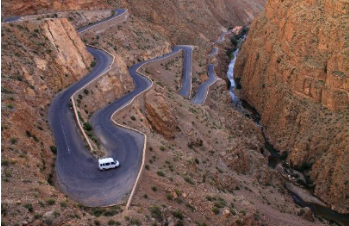
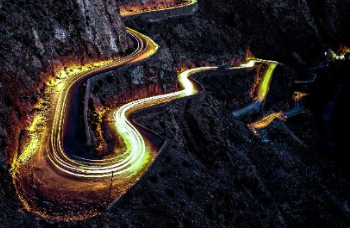
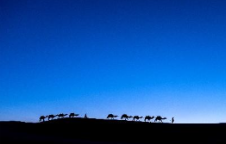
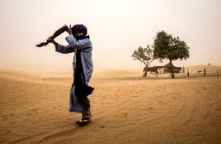
We arrive at the Merzouga desert, passing through valleys where greenery and rivers flow, on serpentine roads, and recording magnificent images in our minds and cameras at every place we pass. The Sahara is a huge land area, mostly consisting of barren lands, but with mountains, valleys, forests, towns, cities, countries, giving the feeling of endlessness from the shores of the Atlantic Ocean to the shores of the Red Sea, and recently celebrating its 2.5 millionth birthday...
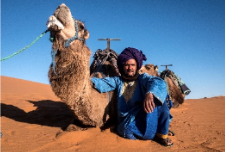
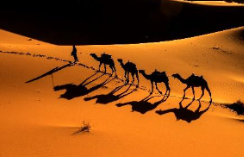
We feel the golden sands with our bare feet as we step on the patterns created by the dance of the sands with the wind, which gives a feeling of nothingness. On the night of the day we arrived in the desert, we arrive at our tent deep in the desert with a journey of about 1.5 hours on the backs of our camels under the moonlight. We sip our wine in front of the fire lit by our Berber friends, accompanied by African melodies pouring from their mouths and instruments. In the morning, with our shadows accompanying us on the sand, we follow the head of the caravan, swaying in step with the rhythm of the camels, and take photo breaks, returning to our hotel.
FEZ
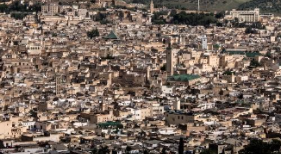
The city that consists of three separate cities and gave its name to a country. The largest medieval Islamic city in the world and the capital of the country until 1925. The second most populous city in the country with a population of 1.2 million. Fez consists of three separate cities founded in different periods and intertwined; Ville Nouvelle founded by the French, Fez al-Cedid founded by the Merinids in the 13th century and Fez al-Bali founded by the Idrisids in the 8th century...
When you climb the Borj Nord castle, you see a fascinating golden city panorama of Fez. When you enter the Medina, you encounter a spiral texture of shops, houses and streets. The narrow streets are connected to each other and give the impression of being in a labyrinth.
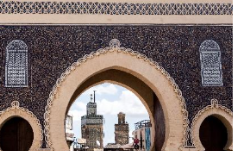
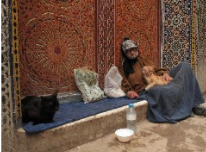
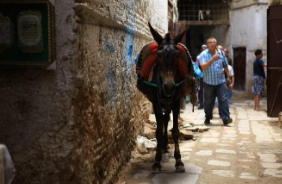
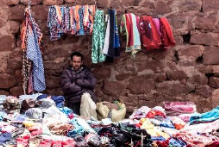
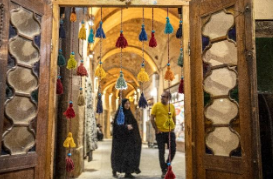
Fez al-Cedid Street is a street where locals and non-locals bargain for something, and as we continue on our way amidst the buzz of bargaining, we reach a large square where people gather and spend time in the evenings, and from there we arrive at the entrance to Old Fez, the Bab al-Celud gate. The moment you pass through the gate, you find yourself in a life that has preserved itself for over a thousand years. The narrow labyrinthine streets that have wrapped around the entire city like a spider web, crowds continuing their daily rush on donkeys and mules, streets full of people with cellabes in local costumes resembling Jesuit priests, people who look at us foreigners who have come from a thousand years later...
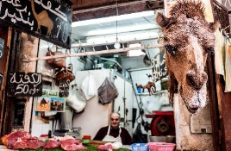
Markets where the smell of mixed olives, sour cheese and spices rises, severed camel heads with their tongues hanging out waiting for buyers on the stalls, chickens and rabbits looking hopelessly from their cages at their hungry customers...
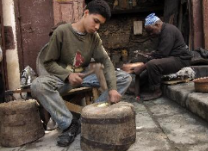
In the coppersmiths' bazaar; the rhythm kept by the craftsmen creates an orchestra atmosphere in the bazaar. It is a must-see place with its craftsmen decorating copper trays, cauldrons and pottery with magnificent patterns in a few minutes.
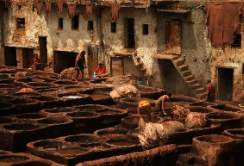
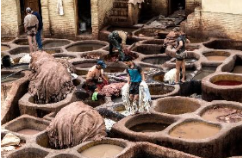
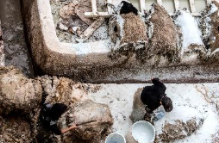
A nose-stinging smell rising from the Fez River pulls us away from the Coppersmiths’ Market and towards it. You are now in the Tanners’ District.
We get the chance to climb up to the roof of one of the leather shops in the neighborhood and see the source of the smell that makes our noses ache. Half-naked young workers processing leather in dozens of earthen pits of different colors. Its appearance affects you as much as its smell, if not more. They still work with methods from the Middle Ages here. Despite its strong smell, it is a must-see.
ATLAS MOUNTAINS
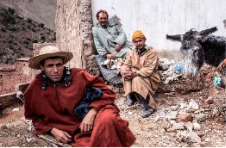
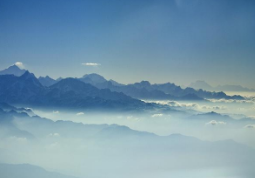
When you set off towards the Atlas Mountains, the people and the settled life pattern also change. You come across settlements called Kasbahs. The people here build their houses from palm tree fibers and clay. The villages are generally located in valleys and mountains. In the golden age, the Olympian gods began to stand against the Titans who ruled the world. Atlas, the son of the Titan king Lapetos, takes part in the great Titan war against Zeus with his brother. While his brother receives Zeus' lightning, Atlas is punished by carrying the sky on his shoulders forever. It is not known whether the Atlas Mountains, which separate the Mediterranean coasts of Africa from the Sahara Desert and whose peaks reach the sky, are the stone form of the Titan Atlas, but the country we call Morocco today has been the subject of this story in Greek mythology.
CHEFCHAOUEN
Chefchaouen (pronounced as Chefchaouen) is a cute, deep blue town painted entirely in blue at the foothills of the Rif Mountains, very close to Tangier and Tatvan. If only it had the sea, it would be a perfect holiday resort, a mountain town that we would call a coastal town... This is a city founded in 1470 with a mixture of Moroccan and Andalusian architecture, where a very dense Jewish population lived for a period, and after 1920 it fell into Spanish hands until 1960, and today it continues its path with a more religious Moroccan population...
TANGERIA
Tangier is the northernmost point of Africa, the place from where Europe looks out to Africa. Located right on the shores of the Strait of Gibraltar, this city has witnessed a rich history.
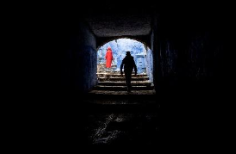
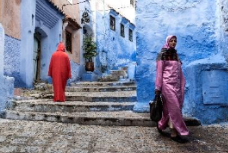
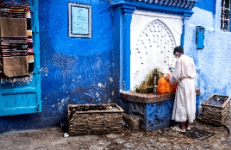
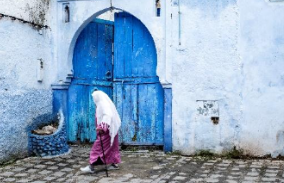
Tangier, which entered history with the trading colony established by the Phoenicians, continued its existence as Roman, Vandal, Byzantine, Arab, Moroccan, Spanish, Portuguese and for a short time British territory.
This city, which has a cosmopolitan structure, has Spanish and Portuguese elements in its architecture. This city, where almost everyone speaks Spanish, is the first stop for European adventurers in Morocco, with its streets that are not very scary at night.
ASILLAH
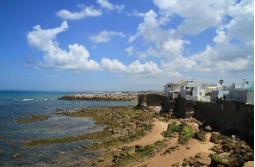
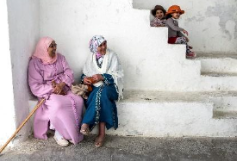
A magnificent town covered in white and blue. This town is in a position where you can feel the anger and grandeur of the Atlantic Ocean in a windy weather. The magnificent roar of the ocean never leaves your ears alone while you are in the town. As you walk through the narrow streets decorated with white and blue houses built by the Portuguese in the 1400s within the city walls, you start to think that you are walking in the streets of a fishing town in Portugal. Suddenly, a woman jumps out on the balcony and shouts to her son in Arabic, an Arabic radio broadcast spreading to the streets from an open window, and sometimes the sound of the call to prayer remind you that you are in Morocco.
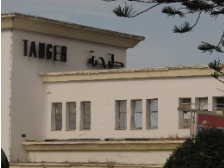
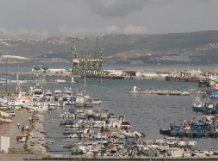
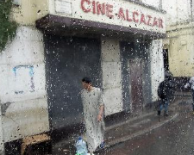
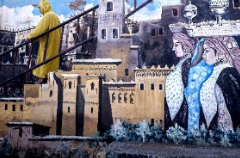
Strolling through the streets, which are brought to life with colorful drawings and paints by wall painters from all over the world who participate in the festival held every year in July, taking photos or just sitting and being alone with yourself will definitely make you feel like your soul is resting… This is a place that will leave a mark on your memory with its houses within the walls, antique and handicraft shops, ocean view from the walls, the castle of the notorious bandit of the 20th century, Resuli, and the wall paintings that adorn the town walls in the small town of Asillah.
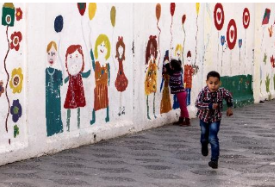
My trip to Morocco started at Casablanca airport and ended at the airport of this city. The only thing that remained on my mind as I boarded the plane was the desire to return to these lands as soon as possible.
The fascinating aspect of Morocco is that within hours, new places unlike anything you have seen before greet you… Geography, climate, nature, culture, race, language, architecture greet travelers in a different guise every day…
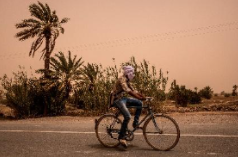
Final word…..
Actually, not to arrive, but just to go… that was what I wanted. No matter which direction I go, I think of every journey I take as a journey into myself. Sometimes, to find the right path, you have to go off the path. With the desire to be on new paths…..
Note: I would like to thank my teacher H. Fazıl Yıldırım, who guided us on both of my trips to Morocco, who has visited this country dozens of times and is, in my opinion, a true Moroccan expert, for his contributions.
FOR PHOTOGRAPHERS
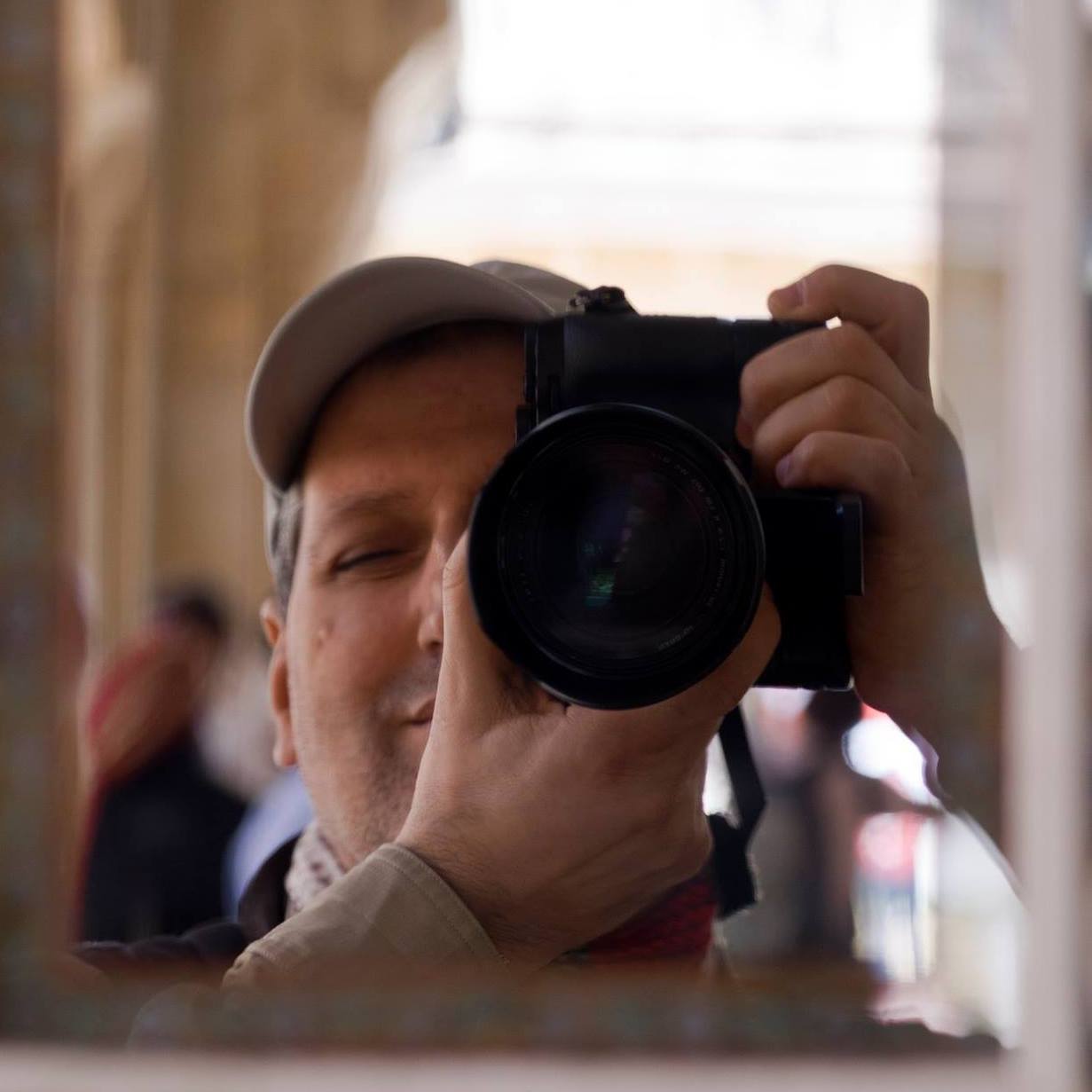
On long-term trips, especially if you intend to produce photos, the photography equipment you take with you should be of high quality and should not tire you out during long-term transportation. Our Morocco trip was also a bit long and tiring. We couldn’t stay more than 1 day at each place we went because we visited so many places. In this sense, my biggest supporter on this trip was Fujifilm equipment with its mirrorless bodies. Heavy DSLR cameras and lenses were both challenging my mobility and causing serious back and waist pain after a while. I took Fuji XT-1, X-PRO-2 and X 70 bodies with me on my Morocco trip as cameras. I took my 10-24 mm wide angle, 16-50 f/2.8, 40-150 f/2.8, 18-135 mm and 56 mm f/1.2 lenses with me. In street photography, the 16-50 f/2.8 (equivalent to 24-70 mm full frame) lens has been my biggest supporter, both in terms of sharpness and lightness.
Morocco is a very difficult place when it comes to photography. Those who have been there know that most of the people do not want to take photos and even get angry at you, and sometimes they come to you and ask you to delete the photo you have taken. During this trip, I received the greatest support from my X-70. This camera is small enough to fit in a pocket, but it is a great camera with its fixed f/2.8 lens and the ability to shoot at 3 different focal lengths (23mm, 35mm, 50mm) and its ability to produce sharp photos in DSLR settings. It was very useful especially during our trip to Morocco, as it did not attract anyone's attention while walking among the people in the bazaars and did not disturb people. Such a small camera makes your job much easier during your trip to Morocco. Such compact and sharp cameras that produce photos are very useful especially in crowded places such as festivals, or in countries and places where taking photos causes trouble for people. Instead of putting huge lenses in people's eyes and causing discomfort, you can create appropriate frames and take your photos comfortably without attracting any attention. Also, in very narrow interiors, F/ With its 2.8 mm open aperture, wide angle and flip-up screen, these types of cameras are lifesavers.
One of the most important parts of a Moroccan trip is the desert. What you need to pay attention to here is to prevent dust from getting on your camera and lenses. For this reason, I recommend that you do not change lenses when you are going to take photos in the desert. There is a possibility that you may get caught in a sandstorm in the desert, and the best solution for this is a body and lenses that are resistant to sand and dust. Also, if you are going to go to the desert with a single lens, it is advantageous for you to use a slightly wider range zoom lens (such as 24-105 or 18-135 mm). If you are going to set off with a double body, two lenses, 16-50 mm (24-70 mm full frame equivalent) and 40-150 mm (70-200 mm full frame equivalent), will do the job easily.
The lightness and portability of your camera and lenses means that the photo bag you will take with you will also be smaller. This allows you to move more easily. In this way, you can carry more equipment with a smaller bag. Another recommendation I have is to use a photographer's vest with plenty of pockets. In this way, you can always carry your batteries, lenses and cards with you and move quickly.
Yorumlar