Kenya is the country with the densest wild animal population in Africa, located in the east of Central Africa. You can experience the real Africa in National Parks, which are protected animal and plant reserves. In North Africa, it is possible to witness the migration of 2 million animals between Tanzania (Serengeti) and Kenya (Masai Mara). Herbivorous African antelopes, zebras, and Thomson gazelles migrate to Kenya in June because the dry season begins in Tanzania, and in November, they migrate back to Tanzania because the dry season begins in Kenya.
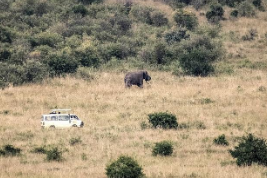
SAFARI
Safari, which literally means ‘Journey’, is a real type of journey where you sharpen your eyes, open your ears, breathe in all the smells, and be ‘in the moment’ with complete attention because you never know what you will encounter in the wild. A journey without a destination, without a result, where you only appreciate being on the road and the coincidences you encounter.

In Safari, you start the day by experiencing the awakening of nature with the sunrise, the freshness of the air, the smell of sage, and you experience the feeling of infinity with endless landscapes throughout the day. And throughout the day, you slowly step into a completely different world with the lions, leopards, cheetahs, buffalos, hippos, gazelles, zebras, elephants, antelopes, giraffes, and colorful birds you see. You learn that they all have different life cycles and different characteristics.


Every safari day that deeply impresses and amazes you ends with a magnificent sunset and the show of thousands of stars in the sky. You wait for the next day with excitement, wondering about the surprises that await you the next day.
Masai Mara National Park
Every year, between August and October, approximately two million wildebeests and zebras and some other animals migrate from the Serengeti-Tanzania to Masai Mara-Kenya in search of fresh grass. During the world's largest migration, leopards, lions, jackals and crocodiles follow the herds most closely. The migration is completed with the beginning of the short rainy season in November, returning to the Serengeti and Ngorongoro Park in Tanzania. In addition to the Great Migration, Masai Mara is also very suitable for safaris throughout the year. It has been recorded that 500 different species live in the region for bird enthusiasts. Masai Mara is also famous for its magnificently beautiful Masai lion and cheetahs, which you can observe very closely.


National Parks in Kenya
Samburu National Park
Samburu, a narrow plain stretching towards the rocky slopes, is an ideal area for rare species of wildlife such as leopards, ‘grevy’ zebras, ‘beisa’ oryxes, ‘reticulate’ giraffes. One of the most striking features of Samburu National Park is the privilege of watching the numerous elephants bathing in the Ewasa Nyiro River. To the east of the park, there is a spectacular view of the Shaba River flowing between waterfalls.
Amboseli National Park
In Amboseli National Park, at the foot of Mount Kilimanjaro, you can see herds of elephants and gazelles, lions, leopards and cheetahs. Different species of birds and fish are also found among the marshes and seasonal lakes.
Meru National Park
Meru is the only National Park where you can see lions in the trees. The wildlife in Meru National Park is very diverse, with different habitats ranging from forest to grassland, from swamps to dozens of rivers lined with African palm trees. The most common species are lions, leopards, cheetahs, elephants and buffalo. It is also possible to see many hippos and crocodiles in the river.
Tsavo National Park
Tsavo National Park; as an alternative to the beauties of the wild nature on the west side, offers a sparkling stream gushing from among the volcanic rocks. Visitors can walk to the source of the Mzima Springs and witness wild animals drinking water by the river. You can also go underwater with the observation tank and watch how the heroes of the wild quench their thirst from there and see the different fish species in the river up close.
Lake Nakuru
Lake Nakuru, in the south-west of Kenya and in the heart of the East African Rift Valley, is a flamingo paradise where thousands of pink flamingos can be seen, as well as a variety of birds, buffalo and the endangered black and white rhinos.


Masai Mara Animal Species and Brief Information
African Elephant
Elephants generally live in herds. Thanks to the 50,000 muscles in their trunks, they can tear off a thick branch from a tree on one hand, and on the other hand, they can grab a thin bark from the ground and pick it up. They can hold 4 liters of water at the same time in their strong, flexible and sensitive trunks. Thanks to a communication organ on their foreheads, they can communicate with each other from a distance of 10 km by emitting sounds that the human ear cannot hear at a frequency below 20 hertz. Elephants, who are herbivores, eat 330 kg of greenery a day, meaning they spend 16 hours a day eating.


CHEETAHS; Originated in India, cheetahs, which means spotted in Hindi, have black spots under their eyes like teardrops. Able to run at a speed of 120 km per hour, cheetahs are known as the fastest running land animals in the world.


LIONS; are the most social cat species. One or two male lions lead the females and cubs and live in a pack. You can distinguish the males by their manes, as they get older their manes get longer and thicker. The male's job is to protect the area from dangers and fight potential intruders. The female's job is to hunt and raise their cubs. Lion cubs are born blind and their eyes open after 6 days. The mother lion breastfeeds the cubs for 3 months, then teaches them to hunt, and when they are 1 year old they can hunt on their own. The roars of lions can be heard from 5 km away.


LEOPARDS live alone. Leopards, the best tree climber, usually catch their prey by jumping over the tree and eat it by taking it up the tree to prevent other animals from taking it. Leopards have a line of black spots under their necks.


ZEBRAS live in herds. No two zebras have the same stripes, each zebra has its own unique stripes, like human fingerprints.


GIRAFFE; Giraffes, the tallest animal in Africa, are the only animal species born with horns. Giraffes, the tallest, strongest and most docile land animal, are also the land animal with the biggest heart.


HIPPOPOTAMS; They live in flocks in the water, and generally seem harmless, but if you get between them and the water, you may come face to face with the most lethal and dangerous animal of Africa. They come to land to feed at night and return to the water when the sun starts to shine.


AFRICAN ANTELOPE; African antelopes (Ox-headed antelopes) can grow up to 1.15-1.40 meters. Their weight varies between 150-250 kg. Their living continent is Africa. Their habitat is especially in the Serengeti plains. They can live more than 20 years in the wild. They feed on grasses, thorny leaves and fallen fruits in the savanna. They migrate once or twice a year. The reason for this is the drought and the scarcity of fruits.


Black African Rhino
This mammal, which lives in the savannas of eastern, central, and southern Africa, is 1.50 cm tall and weighs 1-1.5 tons. This animal, which does not like to go outside its own territory and lives alone, determines its territory with the feces it leaves. It finds a mate during the breeding season. The female gives birth to only one calf after a 17-18 month pregnancy. When the second calf is born, the first calf leaves the family. The black rhino is a very skillful animal. It can move easily even on 50 cm wide paths. This herbivorous animal usually wanders around in the early hours of the day to feed. The sound it makes while chewing its cud at night can be heard from 20 km away. Despite its giant size, it is an animal that can move at a speed of 50 km per hour and is generally peaceful.


Jackal
It is a mammal from the dog family; two species live in Africa; and a third species lives in North Africa, Asia, Southeastern Europe. Its colors vary from black to dirty yellow. Its average shoulder height is 40 cm and its weight is 9 kilos. It is generally a nocturnal animal. It is known for its howling after dark and lives mostly in steppes, marshes and rural areas. Females have 6-9 cubs in a litter. The jackal, which feeds mostly on carrion, shares the remains of the prey torn apart by large predators such as lions and tigers with hyenas and vultures. It also hunts small animals.


Thomson Gazelle (Gazella thomsoni)
This animal, which lives in the vegetated savannas of Africa close to the equator, is approximately 65 cm tall and weighs 20-30 kg. The length of the horns of males reaches 30 cm. The horns of females are shorter. The Thomson gazelle, the most common gazelle species in Africa, usually lives in groups of 10-50. They feed on grasses and tree leaves in the savanna.


Black Oryx
This animal lives in the savanna and semi-desert regions of South Africa. This antelope, which has a strong structure, is 120 cm tall and weighs 205 kilos. The length of the horns of male antelopes is 120 cm. The horns of females are slightly shorter. They generally live in groups. Only the old antelopes that are thrown out of the herd wander alone. The number of a group consisting of 30-40 antelopes can reach 100 in the dry season. The female black antelope gives birth to a single calf after a pregnancy period of 270 days.


African Buffalo
The African buffalo (Syncerus caffer) is a horned animal from the Bovidae family. This animal reaches a height of 1.7 meters and a width of 3.4 meters. The male buffalo living in the savannah weighs 500-900 kg, and the males can be larger than the females. Buffaloes living in the forest are only half its size. The African buffalo is not as closely related to the larger Asian buffalo, but they share the same ancestor. They pose a danger to humans because of their defensive nature, and for this reason, unlike their Asian relatives, they have never been domesticated. This is why the African buffalo is number 1 on the list of Africa's big five.
It prefers to be in the shade and near water. Although strong and calm, they are aggressive enough to pose a serious danger if disturbed. The herbivorous buffalo's pregnancy lasts 330-346 days. There is no specific mating season. The female breastfeeds her calf until it is 5-15 months old or until the new calf is born. The calf lives with the mother for two years. Females start mating at 4-5 years old, males at 7-8 years old. They live in herds. They do this especially to protect themselves from big cats. Lions attack buffalo in particular. 40 percent of Savuti lions' food consists of buffalo.
For Photographers;
The Kenya trip is a trip to observe wildlife. Therefore, the lenses you will use most are telephoto lenses.
A 40-150mm (70-200mm full frame equivalent) lens will do the job to some extent. If you use a 70-200mm lens with a cropped camera (with an APS-C sensor), this will give you a distance close to 300mm, which is enough for many things. However, if you have a 100-400mm lens, you can take more detailed wildlife photos. You will also come across many bird species in Masai Mara and Kenya in general. A 100-400mm lens is definitely necessary for shooting birds. You can also increase your focal length by using a teleconverter, but this will make you lose 1-2 stops. In such a case, you may have problems with the shutter speed when taking photos at sunrise and sunset. I used a 24-70mm f/2.8 lens, along with a 40-150mm f/2.8 and 100-400mm telephoto lenses during my trip to Kenya. Dual body I took the photo with. Since you are constantly driving around in your car, there is no problem in carrying equipment with you. A monopod or tripod is not very useful on safari. You are constantly shooting on the car and when 4-6 people stand side by side in the vehicles, it becomes a problem. Instead, there are bags called bean bags. There are materials called beans or glass beads inside. You can put these on the side rails of the vehicle and place your lens on them to take photos comfortably. I did something practical on this trip. I took a zippered shoe washing bag, put a small fiber pillow in it and closed it. I placed my lens on it and took photos very comfortably. 16-50 mm (24-70 mm. (full frame equivalent) is enough for landscapes and wide angle shots. Since you are constantly walking around, the frame is already wide. I have never used a wide angle lens like 10-24 mm. If you are going on safari, the vehicles should definitely be 4 people. It is very difficult to take photos in a 6-person vehicle. It is very difficult to both stand up and change places in the vehicle. The most important thing you should pay attention to is to constantly check the shutter speed values since you are constantly using a telephoto lens. Before you get excited about an event you suddenly encounter, definitely check your shutter speed value, otherwise there is a high probability that your photos will be blurry.

Yorumlar